As I walked down the path to the hot tubs that overlooked the Pacific Ocean, a sense of dread rose in my stomach. I’d heard that the tubs were clothing optional. Still, I assumed the scene would be much like a European beach: some women would be topless, a few others would be bottomless, and the vast majority of bathers would be clothed.
I planned to be one of the clothed.
A man walked a few feet ahead. I knew him from a workshop I’d taken earlier in the day. I clutched my swimsuit in my hand. He carried nothing.
“I guess he’s going in nude,” I thought. My dread intensified. What if everyone is nude? What if there aren’t any changing rooms? What if the hot tubs are coed?
As I neared the bathhouse, I saw Ann, a woman I’d met at the same workshop.
“How was it?” I asked. Then, before she could answer, “Did you do it nude?”
“I did!” Ann proclaimed, the sound of victory in her voice.
“If I wear a swim suit, will I stick out like a polar bear in Florida?”
“You…. You don’t want to wear… No, um, no. Don’t wear bathing suit. You really shouldn’t.”
“But it’s clothing optional, not clothing forbidden.”
“No,” she said firmly, convincingly, as if she knew first-hand of an ordinance that forbade clothed bathing. “No. Don’t.”
“Maybe I shouldn’t go in,” I said, turning away from the bathhouse.
“Oh, go in. I was scared, too. But I did it! If I can do it, you can!” Ann nearly sang.
Ann led me inside. To the left, she pointed to the room where the towels were kept. I grabbed one. As I turned to walk down the stairs that led to the changing area, I nearly bumped into a man, all of his pale skin, hair and hanging parts exposed.
I averted my eyes, meekly smiled and whispered “sorry” as I stepped around him.
“The changing rooms are coed?” I hissed.
“You’ll be fine. You’ll never see these people again. I repeat: You will never see these people again.”
Then, shaking her clenched fist in the air, she proclaimed, “You’ve got this!”
I turned toward a wall. With my back to the room, I took a deep breath. Then I pulled off my shirt, taking special care to keep it right-side-in as I folded it. I did the same with my pants. Now I was standing in a camisole and panties, Ann’s “you’ve got this” reverberating through my mind.
I pulled off the camisole.
Then I yanked down the panties and quickly wrapped my towel around my torso. For a moment, I stared longingly at my swimsuit, now lying unused on the bench. I hid it under my clothes as if it were contraband. Then I turned and walked toward the tubs, averting my eyes as I passed one nude man, then two, then three. As I stepped outdoors, I felt as if I were stepping into Renior’s “three girls taking a bath with crab,” except it was more like “25 men taking a bath with three women and one prude.”
In case you’re not completely sure, I was the prude.
To my right were three individual tubs, each inhabited by a naked man. They lounged with their knees splayed, as anyone might do while bathing in their own private bathtub at home.
“Isn’t that? Oh my gawd, no,” I thought as I recognized the husband of a friend. I turned my head quickly, pretending not to see him.
I kept walking. In a larger tub were a dozen or more men, some sitting on the edge, all of their manliness on display. They were talking and gesturing animatedly, as if they were at a coffee shop. I started to turn back in retreat, but there were nude people behind me, on their way to the tub in front of me.
I felt surrounded and cornered, exposed and vulnerable. With no where to go but forward, I kept walking. In the last tub, there was a blur of flesh that I recognized as one woman and two men. I stood awkwardly, trying to figure out how to submerge myself as quickly and unobtrusively as possible. What to do with the towel? How to get into the tub? Was everyone staring at me? Do I know that man?
Do I know that man!?!
He came into focus. Yes, I’d been sitting next to him all morning at the workshop. I knew what he did for a living and where he lived. I might never see him again, but he was no stranger. Nor was he a lover or a friend. For me he fell squarely into the People Who Should Never See Me Naked category.
I hesitated. I began to turn. He looked up. His eyes focused with recognition.
“I’ve got this,” I told myself. “Just do this. You’re not going to die from this.”
I opened my towel and draped it over a wall. Then I slowly stepped into the tub.
The water was no friend for the bashful. As transparent as air, it left nothing to the imagination. I pulled my knees into my chest and wrapped my arms around them. I closed my eyes. I listened to the ocean. I willed myself to relax.
I opened my eyes to breasts, rear ends, pubic mounds, and swinging penises. What to do? Where to look? Where not to look? I squeezed my eyes shut.
“Relax… relax,” I told myself. “Enjoy whatever it is that people enjoy about bathing nude with strangers.”
Seconds ticked by. Then minutes. I endured, but I did not enjoy.
“Animals don’t wear clothes,” I told myself. “You walk around naked at home. You were born naked.”
Then another part of me, said, “I’m not an animal. I’m not at home, and I don’t care what I was wearing when I was born!”
With that, I stood, wrapped my towel around myself, and I left, all the while mentally muttering to myself, “I don’t get nudists. Why do nudists exist?”
A couple hours later, back at the workshop, Ann approached. “How was it?”
“I couldn’t relax,” I said. “I don’t get it.”
“Are you going to try it again?” she asked.
Silence.
“You should try again,” she said. “They’re open 24 hours. How about in the morning? Try again in the morning.”
“Maybe I’ll do that,” I said, fully planning on not doing that at all.
Then morning came. I tossed. I turned, and I wondered: Could I get past my fear and my self-consciousness? Was it possible for me to be at one with my own flesh? If it was possible, what would that feel like?
These questions drove me out of bed and propelled me toward the bathhouse.
This time, as I slipped out of each item of clothing, I felt myself becoming a new woman. I was no longer Alisa the Prude. I was now Alisa the Nude Goddess.
Off came the camisole. Down went the panties. This time, rather than wrapping the towel around my midsection, I carried it loosely in my hand, and I walked into the great outdoors.
There was no one in the group tub to my left, the one with the best view of the ocean. I draped my towel over a railing and stepped in. Pins and needles shot through my feet. The water was a good 10 or 20 degrees hotter than the day before. There I stood, all of my womanliness exposed to the world. It wasn’t scary, nor was it sexy.
It was merely normal.
Slowly and gently I bent my knees, allowing the scalding water to cover more of my flesh.
Once I was completely submerged, I relaxed just as I would in my own bathtub at home. I rested my arms on the edge of the tub, my legs casually splayed open. I listened to the surf. I inhaled the cool, clean air. As I watched the waves roll in, I noticed tiny little black dots moving in the surf: seals. They were in clusters, diving into the water for fish and floating on their backs.
I rested my head against the lip of the tub and stretched out my legs and arms. Now I was floating on my back, just like a seal, basking in the normalcy of my nudity. I’d been liberated from the prison of my self-consciousness, and I was free.
Would you have bathed nude in front of strangers? Do you think Americas are prudes? What are the benefits of staying clothed? Of taking it all off? Leave a comment.


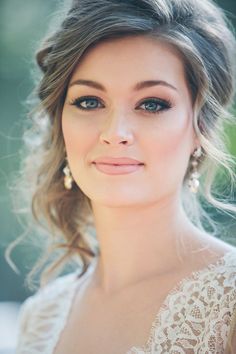 The one thing that every bride should keep in mind is that with regards to bridal marriage make up, less is actually more.

 Apparently Kiri Blakeley and I were destined to become friends. Kiri used to write regularly for Forbes Woman. One day, about a year ago, my phone rang. I picked it up. It was Kiri. She interviewed me about something or other. I think it was a story about celebrities and how they suck at staying married.
 Apparently, this isn’t the case. Or, at least, it’s not the case in Brooklyn. Now, let me tell you something. Kiri is drop dead gorgeous. And she, at that time, was working an enviable job at Forbes magazine. She was quite the catch by anyone’s standards.
 Recently some of my friends were revealing their fantasies. One admitted that, in her mind, she sometimes marries a wealthy man who pays all her bills and takes her on trips around the world.